R
Dhruv Fabrotech

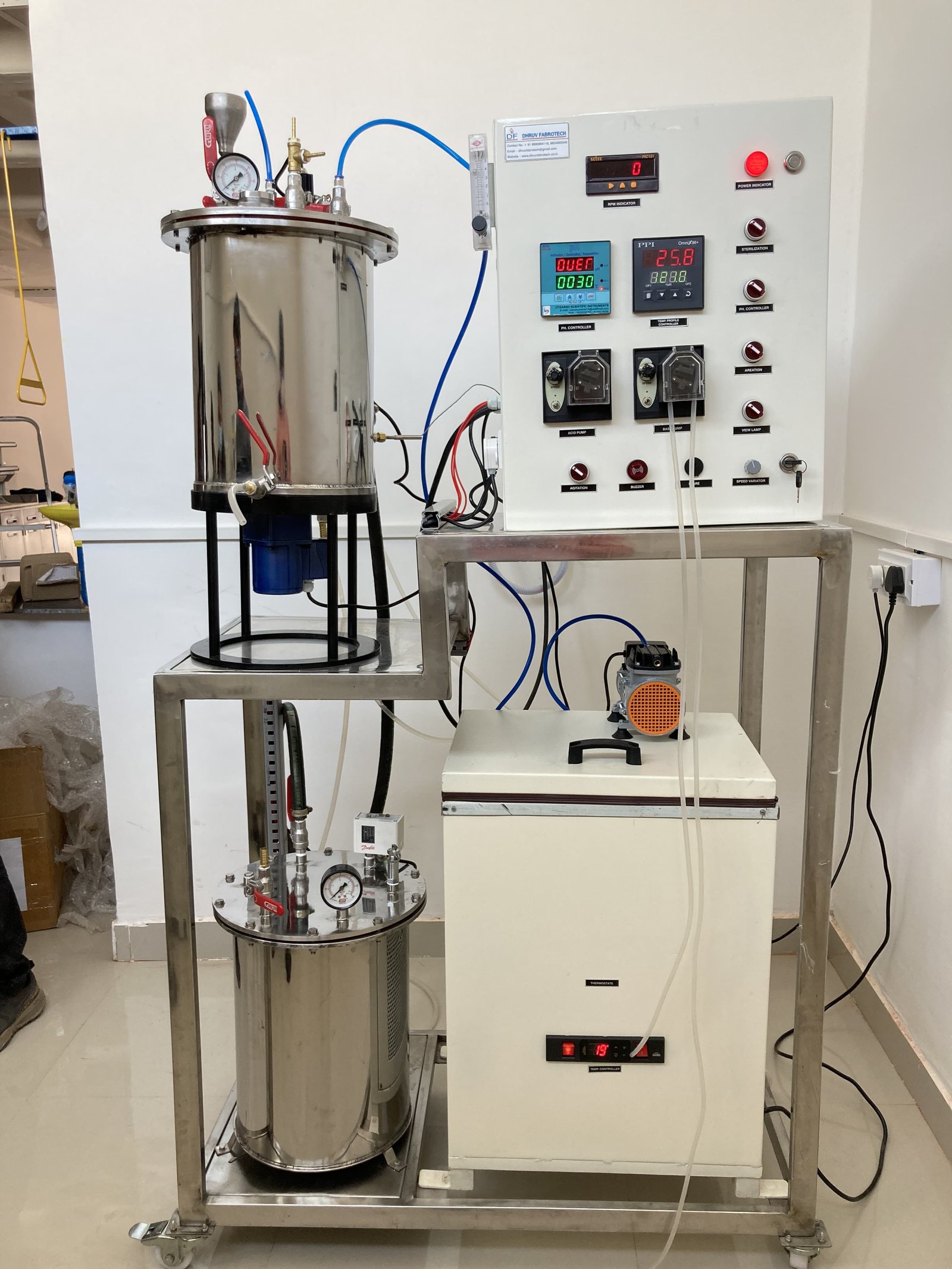
Anytime you observe a modern biotechnology or pharmaceutical lab, you have probably noticed a shiny steel or glass vessel bubbling in a corner of the lab. That’s the laboratory fermenter heart of every fermentation experiment.
Today, fermentation isn’t only for making bread, curd, or alcohol. Now It plays a very crucial role in producing medicines, enzymes, probiotics, and even agricultural products. For example biofertilizers. But for all these experiments to happen, scientists need one reliable partner is a good lab scale fermenter.
Choosing the right fermenter isn’t just about buying only equipment. It’s about ensuring your research gives accurate, repeatable, and safe results. Let’s check why these machines are becoming a must have for research labs and small-scale production units in India.
A laboratory fermenter, also called a research fermenter or lab-scale bioreactor, is a compact vessel used to grow microorganisms or cells under carefully controlled conditions.
It gives you control over:
Unlike large industrial fermenters, which are used for commercial production, a laboratory scale fermenter focuses on precision — ideal for research, testing, and pilot-level studies.
👉 To know more about different fermenter types, safety tips, and pricing, check our full guide — Laboratory Fermenters: Types, Safety & Prices.Why a Laboratory Fermenter Is So Important
Let’s look at the main reasons researchers and industries depend on these systems.
When anyone is doing experiments, accuracy is very important. Even small change in temperature or pH can totally change your fermentation result.
Now new lab fermenters come with smart sensors and auto control system. Once you set everything, machine keep it same till process finish.
So you get same good result every time — very helpful for research and early testing work.
When research budget is low, buying raw material also becomes costly. Using a small lab fermenter is better because you can test your process in small quantity, using less media and power.
Instead of doing big industrial batches, you can do many small trials fast, check which one works better, and improve your formula before going big.
This way you save both money and many weeks of hard work.
Before starting full production, scientists first check how the product works in different conditions.
A research fermenter works like a testing setup where you can adjust things like mixing speed, air flow, or how much nutrients you add.
Once you get the right settings, it becomes easy to move to a bigger pilot fermenter and later to full industrial production.
A laboratory fermenter isn’t restricted to biotech alone. It’s used in:
Because it’s small, flexible, and customizable, a single fermenter can serve multiple research purposes.
No one likes spending hours on cleaning.
That’s why most modern fermenters come with autoclavable vessels or CIP/SIP systems (Clean-in-Place / Sterilize-in-Place).
These make it easy to sterilize without disassembling the unit, reducing downtime and keeping contamination risks low.
Once your lab results are consistent, you’ll need to move to a pilot fermenter.
Choosing the right laboratory model from the start makes this transition smooth because the control parameters and vessel design remain similar.
This ensures the same quality when you scale up production.
The price of a laboratory fermenter depends on its capacity, materials, and level of automation.
Here’s a rough idea of what to expect in India:
| Type | Capacity | Approx. Price (₹ INR) |
|---|---|---|
| Basic Lab-Scale Fermenter | 1–5 L | ₹50,000 – ₹1.5 Lakh |
| Research-Grade Fermenter | 5–20 L | ₹1.5 Lakh – ₹5 Lakh |
| Pilot-Scale Fermenter | 20–100 L | ₹5 Lakh – ₹10 Lakh+ |
Prices usually change depending on what kind of fermenter you pick — glass or stainless steel, basic manual type or fully automatic. The cost also increases if you add any features like data logging, smart sensors, or remote monitoring.
If you’re looking for a trusted fermenter manufacturer in India, Dhruv Fabrotech is a name many research labs and industries depending now.
Here's why:
Whether you need a small 1-litre lab fermenter or a fully automated pilot-scale setup, Dhruv Fabrotech provides reliable solutions built for Indian research and industry standards.
Interested in biofertilizer production?
Check our quick guide — Biofertilizer Plant Machine in India
1. How is a lab-scale fermenter different from an industrial fermenter?
A lab-scale fermenter is smaller and mainly used for research or testing. Industrial fermenters are much bigger and made for bulk production in factories.
2. What size fermenter is best for lab use?
For normal research or college lab work, 1 to 10 litres is enough. If you’re planning pilot trials or small production, you can go for 10 to 100 litres.
3. Where can I buy a good laboratory fermenter in India?
You can contact Dhruv Fabrotech, Pune — they make reliable lab and pilot-scale fermenters with options for automation and customization.
In any lab, a fermenter may look like just another vessel, but it does the most important work. also, it helps run your experiments smoothly, keep everything clean and controlled, and understand your process better each and every time.
When you select the right fermenter for your lab, things become easier, your results stay steady, you save time, and you don’t have to repeat the same work again and again. It’s not just a machine; it’s a small but powerful part of your research journey.
By choosing the right system, you ensure your research delivers consistent results — without wasting time, money, or materials.
Still confused about which fermenter fits your lab?
Talk to our experts at Dhruv Fabrotech today. We’ll help you choose the right model for your research or pilot project — with full customization and support.